
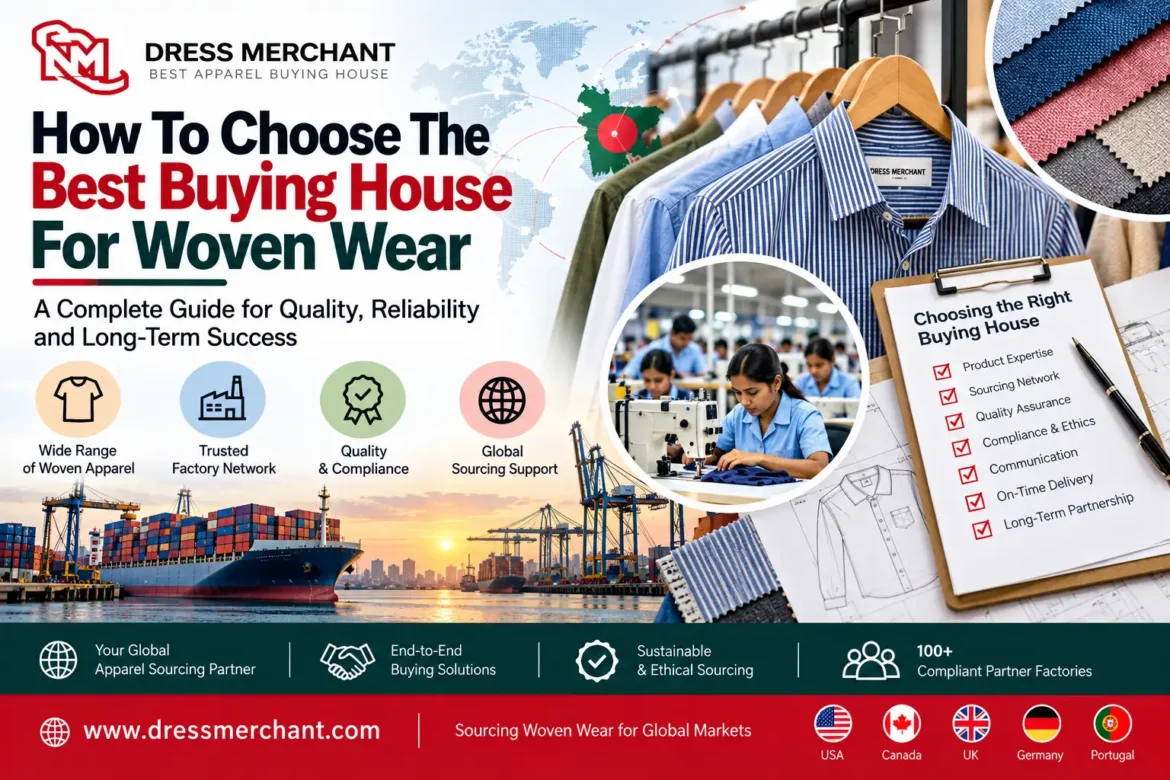
How To Choose The Best Buying House For Woven Wear? Discover the key factors that make a buying house reliable, from fabric sourcing and product development to quality control, ethical production, competitive pricing, and timely export.
Thank you for reading this post, don't forget to subscribe!With Dress Merchant, a leading Garments Buying House, fashion brands get dependable sourcing, production, and export solutions for Apparel and Home Textiles. Make smarter sourcing decisions and build a successful global supply chain with the right buying partner.
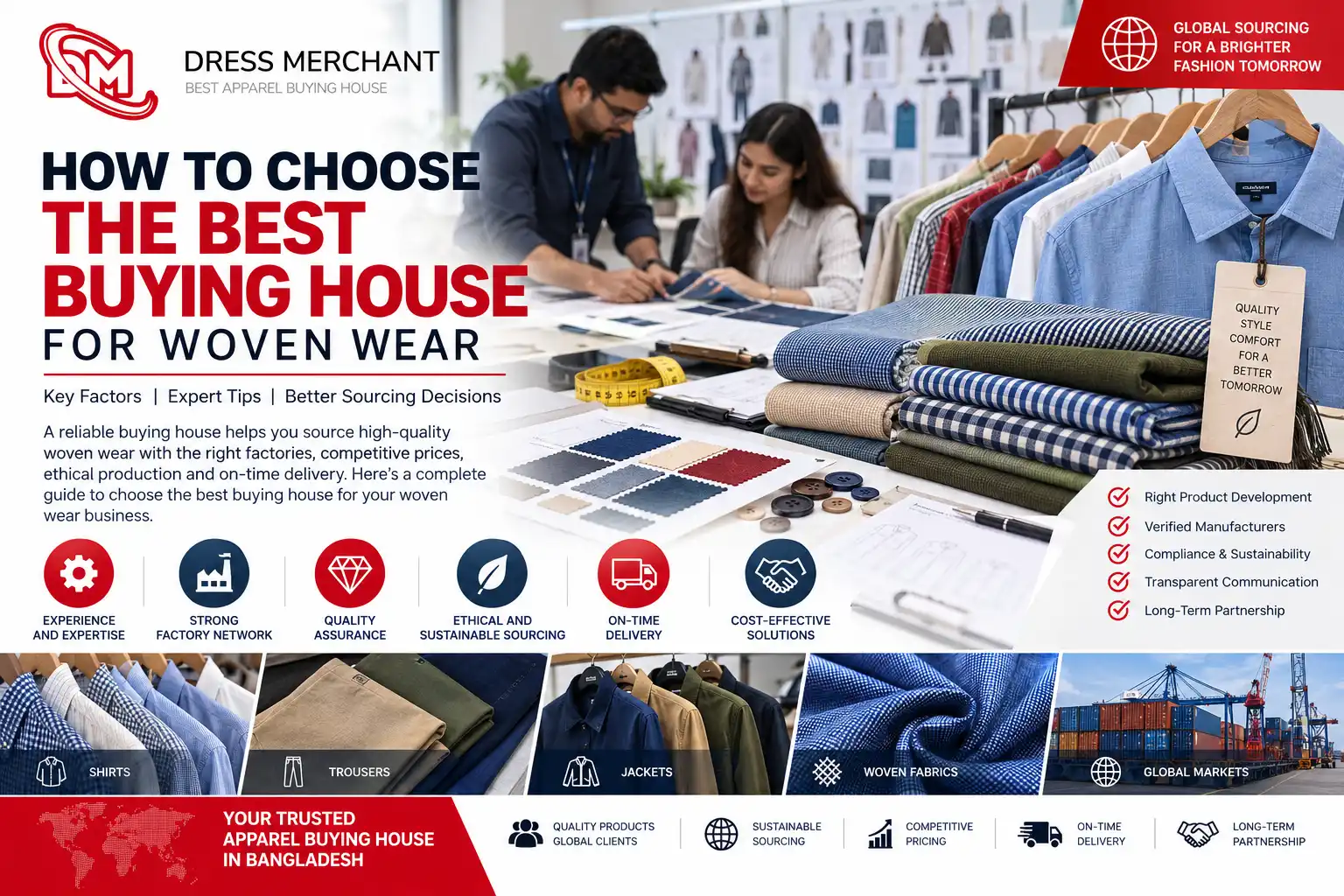
What Is a Buying House for Woven Wear and Why Does It Matter?
A buying house for woven wear acts as a bridge between international buyers and garment manufacturers. Instead of dealing directly with multiple factories, suppliers, production teams, and logistics providers, buyers can work with an experienced buying house that manages much of the sourcing and production process on their behalf. This can make the entire garment procurement process more organized, efficient, and transparent.
Woven wear includes a broad range of garments manufactured from woven fabrics, such as shirts, blouses, trousers, jackets, dresses, skirts, uniforms, and various fashion garments. Because woven products often involve detailed construction, multiple components, specific fabric requirements, and strict quality standards, choosing the right sourcing partner is important.
A professional buying house typically assists with product development, fabric and trim sourcing, supplier selection, sample development, costing, production follow-up, quality inspection, compliance monitoring, and shipment coordination. The buying house may also communicate with factories and buyers throughout the order lifecycle.
For international brands, wholesalers, retailers, and importers, the right buying house can simplify sourcing from Bangladesh and other major apparel-producing markets. An experienced company can help buyers identify suitable manufacturers according to product type, order quantity, quality requirements, target price, and delivery schedule.
However, not every buying house offers the same level of service. Some may specialize in knitwear, while others have stronger expertise in woven garments, home textiles, accessories, or other products. Therefore, buyers should evaluate experience, supplier networks, quality control, compliance, communication, pricing, and export capabilities before making a decision.
Choosing the right buying house is ultimately about finding a dependable sourcing partner that understands your product requirements and can consistently deliver the expected quality, price, and timeline.
How to Evaluate a Buying House’s Experience in Woven Garments
Experience is one of the first factors buyers should consider when selecting a buying house for woven wear. A company that has extensive experience in woven garment sourcing is more likely to understand the technical and commercial requirements involved in producing different woven products.
Woven garments can require specialized knowledge of fabrics, construction methods, trims, stitching, washing, finishing, printing, embroidery, and garment measurements. For example, producing a structured woven shirt requires different production considerations from producing a lightweight woven dress or a tailored pair of trousers. An experienced buying house should understand these differences and know how to identify suitable manufacturing partners.
When evaluating experience, buyers should look beyond the number of years a company has been operating. Ask about the types of woven garments it has sourced or developed previously. A strong buying house should be able to demonstrate experience across relevant product categories and provide examples of previous work where appropriate.
It is also useful to evaluate the company’s understanding of international buyer requirements. Different markets can have different expectations regarding labeling, packaging, testing, product specifications, social compliance, and shipping documentation. A knowledgeable buying house should be able to coordinate these requirements with factories.
Another important factor is the team’s technical knowledge. Experienced merchandising and sourcing professionals can identify potential production problems before they become costly issues. They can also communicate effectively with factories regarding specifications, samples, measurements, materials, and quality standards.
Buyers should also examine client references, company history, product portfolios, and sourcing capabilities before making a final decision. A buying house with relevant woven garment experience can provide valuable support throughout development and production.
Check the Buying House’s Woven Wear Sourcing and Manufacturing Network
A buying house is only as effective as the sourcing network behind it. When choosing a partner for woven wear, buyers should carefully examine the company’s network of manufacturers, fabric suppliers, accessory suppliers, and supporting production facilities.
A strong sourcing network gives buyers access to different manufacturing capabilities. One factory may specialize in shirts, while another may be better suited for trousers, dresses, jackets, or workwear. Matching the right product with the right manufacturing facility can have a significant impact on quality, cost, production efficiency, and delivery time.
The buying house should ideally work with manufacturers that have appropriate machinery, production capacity, skilled workers, and quality management systems. It should also understand which factories are suitable for different order volumes. A small fashion collection may require a different supplier from a large-scale retail program.
Fabric sourcing is equally important. Woven garments can use cotton, linen, viscose, polyester, denim, blends, and many other materials. The buying house should be able to source fabrics according to weight, construction, composition, color, finish, performance, and buyer specifications.
Accessories and trims should not be overlooked either. Buttons, labels, hang tags, zippers, drawcords, tapes, packaging materials, and other components can affect the final appearance and functionality of a garment.
When assessing a buying house, ask whether it has established relationships with reliable factories and suppliers. Also determine whether the company conducts supplier evaluation before recommending manufacturers.
A well-developed sourcing network allows a buying house to provide buyers with more options and greater flexibility. Instead of simply finding the lowest-cost factory, an experienced sourcing partner can identify manufacturers that offer the appropriate combination of quality, price, capacity, compliance, and delivery performance.
Assess Product Quality and Quality Control Standards
Quality control is one of the most important considerations when selecting a buying house for woven wear. A garment may have an attractive price, but quality problems can result in customer complaints, returns, rejected shipments, and financial losses.
A professional buying house should have a clearly defined quality control process covering the different stages of production. Quality management can begin during product development and continue through fabric inspection, sample approval, cutting, sewing, finishing, packing, and final inspection.
For woven garments, quality checks may include fabric appearance, GSM, color consistency, shrinkage, colorfastness, measurements, stitching quality, seam strength, button attachment, zipper functionality, print or embroidery quality, garment construction, and overall appearance.
Pre-production approval is another important stage. Before bulk manufacturing begins, the buyer and production team should agree on approved samples, specifications, measurements, materials, colors, packaging requirements, and workmanship standards.
During production, inspections can help identify problems early. If defects are discovered only after the entire order has been completed, correcting them can become expensive and time-consuming. Regular production monitoring can reduce this risk.
Final inspection is also essential. Finished garments should be checked against the approved specifications and buyer’s quality requirements before shipment. Depending on the buyer’s standards, inspections may follow internationally recognized sampling procedures or the buyer’s own inspection protocol.
When evaluating a buying house, ask about its quality assurance team and inspection procedures. Find out whether inspections are conducted internally or through independent inspection companies when required.
A reliable buying house should treat quality control as an ongoing process rather than a single inspection immediately before shipment. Strong quality management helps ensure that the finished woven garments consistently meet the buyer’s expectations.
Review the Buying House’s Factory Compliance and Ethical Practices
Factory compliance has become an increasingly important consideration for international apparel buyers. When choosing a buying house for woven wear, buyers should consider not only product quality and price but also the working conditions, environmental practices, and operational standards of manufacturing partners.
A professional buying house should have a process for evaluating factories before placing production orders. Depending on the buyer and market, this may involve reviewing factory certifications, audit reports, licenses, safety systems, environmental practices, and social compliance documentation.
Workplace safety is particularly important. Factories should maintain appropriate fire safety measures, emergency procedures, electrical safety, building safety, and worker protection systems. Buyers may also have specific requirements concerning working hours, wages, worker welfare, and employment practices.
Environmental responsibility is another area that deserves attention. Modern apparel buyers increasingly look at water management, chemical handling, waste management, energy use, and sustainable production practices. A buying house that understands these requirements can help buyers identify manufacturers aligned with their sourcing standards.
Compliance requirements can vary depending on the destination market and individual buyer. Therefore, the buying house should understand the buyer’s specific compliance expectations and communicate them clearly to the selected factory.
It is also important to distinguish between certifications and actual compliance management. A factory may hold certain certifications, but buyers should still ensure that the manufacturing facility meets the specific requirements of their program.
A responsible buying house should maintain documentation and follow-up procedures rather than simply collecting certificates. Regular factory assessments and production monitoring can help identify potential compliance issues.
By working with compliant manufacturing partners, buyers can reduce sourcing risks while supporting responsible production. For brands building long-term relationships with customers, ethical and transparent supply chains can also contribute to stronger brand credibility.
Compare Pricing, Production Costs, and Overall Value
Price is naturally an important factor when choosing a buying house for woven wear, but buyers should avoid selecting a sourcing partner based solely on the lowest quoted price. The lowest initial quotation does not necessarily represent the lowest overall cost.
Woven garment pricing can depend on numerous factors, including fabric composition, fabric weight, garment construction, trims, accessories, printing, embroidery, washing, packaging, order quantity, labor requirements, and delivery terms. A professional buying house should provide a clear costing structure and explain the factors that influence the final price.
Transparency is particularly important during negotiations. Buyers should understand what is included in the quotation and whether additional costs may arise later. Fabric changes, special packaging, testing requirements, design modifications, or changes in order quantity can all affect final costs.
An experienced buying house can also help optimize product costs without unnecessarily compromising quality. For example, it may identify alternative fabrics, manufacturing techniques, trims, or suppliers that provide similar performance at a more competitive cost.
However, cost optimization should always be considered alongside quality and delivery reliability. A low-cost factory that repeatedly produces defective garments or misses shipping deadlines may ultimately cost the buyer more than a slightly more expensive but reliable supplier.
Buyers should therefore compare the overall value offered by different buying houses. Consider sourcing expertise, factory network, quality control, communication, compliance support, production management, and export assistance alongside the quoted price.
A transparent buying house should be comfortable discussing costing and explaining why prices change. It should also help buyers understand the relationship between product specifications and manufacturing costs.
The objective should be to achieve a sustainable balance between price, quality, reliability, and service rather than simply choosing the cheapest quotation available.
Evaluate Production Capacity and Ability to Handle Bulk Orders
Production capacity is another important factor when selecting a buying house for woven wear. A sourcing partner may have excellent communication and product knowledge, but if its manufacturing network cannot handle your required order volume, it may not be suitable for your business.
Buyers should determine whether the buying house can support both their current and future production requirements. This is especially important for brands that expect their order quantities to increase over time.
A capable buying house should have access to factories with different production capacities. Small or emerging brands may need smaller quantities, while established retailers may require thousands or even hundreds of thousands of garments across multiple styles and delivery periods.
Production capacity should not be measured only by the number of garments a factory claims it can produce. Buyers should also consider the factory’s existing production commitments, available machinery, workforce, production lines, and ability to maintain quality during high-volume production.
Lead time is equally important. A factory might have sufficient capacity but still be unable to meet a buyer’s required shipment date because its production schedule is already full.
A good buying house should coordinate production planning and communicate realistic timelines. This can include sample development, approval, fabric booking, trim procurement, cutting, sewing, finishing, inspection, packing, and shipment.
Capacity planning is particularly important for seasonal fashion businesses. Delays during peak seasons can affect product launches and retail schedules.
When evaluating a buying house, ask how it manages production allocation and whether it has alternative manufacturing options if the primary factory becomes unavailable. A diversified supplier network can provide additional flexibility.
The right buying house should be able to match your order volume with appropriate production facilities while maintaining quality standards and agreed delivery schedules. This makes capacity assessment an essential part of the supplier selection process.
Consider Communication, Transparency, and Order Management
Effective communication can make a major difference in international garment sourcing. Buyers often work across different countries, languages, time zones, and business cultures. A reliable buying house should therefore provide clear, timely, and professional communication throughout the sourcing process.
Communication begins during product development. Buyers need to share technical specifications, sketches, tech packs, reference samples, fabric requirements, measurements, color standards, and packaging instructions. The buying house must communicate these requirements accurately to the manufacturing team.
During production, buyers may need regular updates about fabric status, sampling, production progress, quality inspections, and shipment schedules. A professional buying house should have a structured system for sharing this information.
Transparency is equally important. If a problem occurs, the buying house should communicate it promptly rather than allowing the issue to become more serious. For example, if a fabric supplier experiences a delay, the buyer should be informed so that alternative solutions can be considered.
Order management also requires careful documentation. Purchase orders, approved samples, measurement charts, packing instructions, inspection reports, invoices, shipping documents, and other records should be organized and easily accessible.
Technology can further improve communication. Many modern sourcing companies use email, video meetings, digital product development systems, messaging platforms, and production tracking tools to keep international buyers informed.
When evaluating a buying house, consider how quickly the team responds to questions and whether information is presented clearly. Ask who will manage your account and whether you will have a dedicated merchandising or sourcing contact.
Good communication does not simply mean responding quickly. It means understanding requirements, documenting decisions, identifying potential problems, and keeping all parties aligned throughout the order.
Check Export Expertise, Documentation, and International Shipping Support
For international buyers, manufacturing is only one part of the sourcing process. The finished garments must also be properly documented, packed, inspected, and shipped to the required destination. Therefore, export experience should be an important consideration when choosing a buying house for woven wear.
An experienced buying house should understand the documentation and coordination involved in international apparel shipments. Depending on the transaction and destination, this may include commercial invoices, packing lists, certificates, inspection documents, shipping documents, and other required paperwork.
Packaging requirements can also vary between buyers. Retailers may have specific carton dimensions, barcode requirements, labeling instructions, folding methods, polybag specifications, and assortment requirements. These details need to be communicated accurately to the factory.
Shipping coordination is another important responsibility. The buying house may work with freight forwarders and logistics partners to coordinate cargo movement according to the agreed shipment schedule and delivery terms.
International sourcing also requires attention to customs and destination-market requirements. Buyers should clearly communicate their documentation and compliance requirements before production begins.
An experienced buying house can help reduce administrative problems by coordinating information between the buyer, factory, logistics provider, and other stakeholders.
When evaluating an export-oriented buying house, ask about its experience with international customers and the markets it regularly serves. It can also be useful to understand whether the company has established relationships with reliable logistics and inspection service providers.
Export expertise becomes particularly valuable when buyers are sourcing from Bangladesh for the first time. A knowledgeable local partner can help coordinate the production and shipping process while keeping the buyer informed.
The goal is to create a smooth transition from finished production to shipment, minimizing documentation errors, logistical delays, and communication gaps.
Why Dress Merchant Can Be a Reliable Buying House for Woven Wear
Choosing a buying house is ultimately about finding a sourcing partner that can understand your requirements and coordinate the complete process from product development to shipment. Dress Merchant operates as an apparel buying house and sourcing partner in Bangladesh, supporting international buyers with apparel sourcing, product development, production coordination, quality management, and export-related services.
For buyers looking for woven wear, having access to an established local sourcing network can simplify communication with manufacturers and suppliers. A buying house can coordinate product specifications, fabric sourcing, trims, samples, production follow-up, quality checks, and shipment preparation according to the buyer’s requirements.
Dress Merchant’s broader apparel sourcing capabilities allow buyers to approach woven garment projects through a structured sourcing process. Instead of managing multiple suppliers independently, buyers can work through one sourcing partner that coordinates different stages of the order.
For international brands, wholesalers, retailers, and importers, this type of support can be particularly useful when sourcing from Bangladesh. Local knowledge can help buyers identify appropriate manufacturing partners, evaluate production options, communicate specifications, and monitor order progress.
However, buyers should always evaluate a sourcing partner according to their own requirements. Before placing an order, it is advisable to discuss product specifications, minimum order quantities, target pricing, quality standards, compliance requirements, production capacity, lead times, and shipping expectations.
A successful sourcing relationship depends on transparency and clear communication from both sides. The buying house should understand the buyer’s expectations, while the buyer should provide accurate product and commercial information.
For businesses searching for a buying house for woven wear, Dress Merchant can be considered as a Bangladesh-based sourcing partner for apparel and related products. The most effective way to determine suitability is to discuss the specific project, product category, order volume, quality requirements, and delivery expectations with the sourcing team.
Conclusion: How To Choose The Best Buying House For Woven Wear
Choosing the right buying house for woven wear can make a significant difference in product quality, pricing, production efficiency, and timely export. A reliable buying house should have strong supplier relationships, experienced sourcing professionals, strict quality control, ethical production practices, and a clear understanding of international market requirements. It should also be capable of managing everything from product development and material sourcing to production monitoring, inspection, documentation, and shipment coordination.
Dress Merchant works as a trusted sourcing agent and buying partner for handicraft manufacturers and exporters, helping international buyers source quality woven wear and handicraft products from Bangladesh. With a focus on responsible sourcing, product quality, competitive pricing, and dependable communication, Dress Merchant supports buyers throughout the complete sourcing and export process.
Whether you are looking for woven apparel, handcrafted products, or customized merchandise for your brand, choosing an experienced buying house can help reduce sourcing challenges and create a smoother supply chain. With the right partner by your side, you can confidently develop quality products, maintain international standards, and build long-term business relationships.