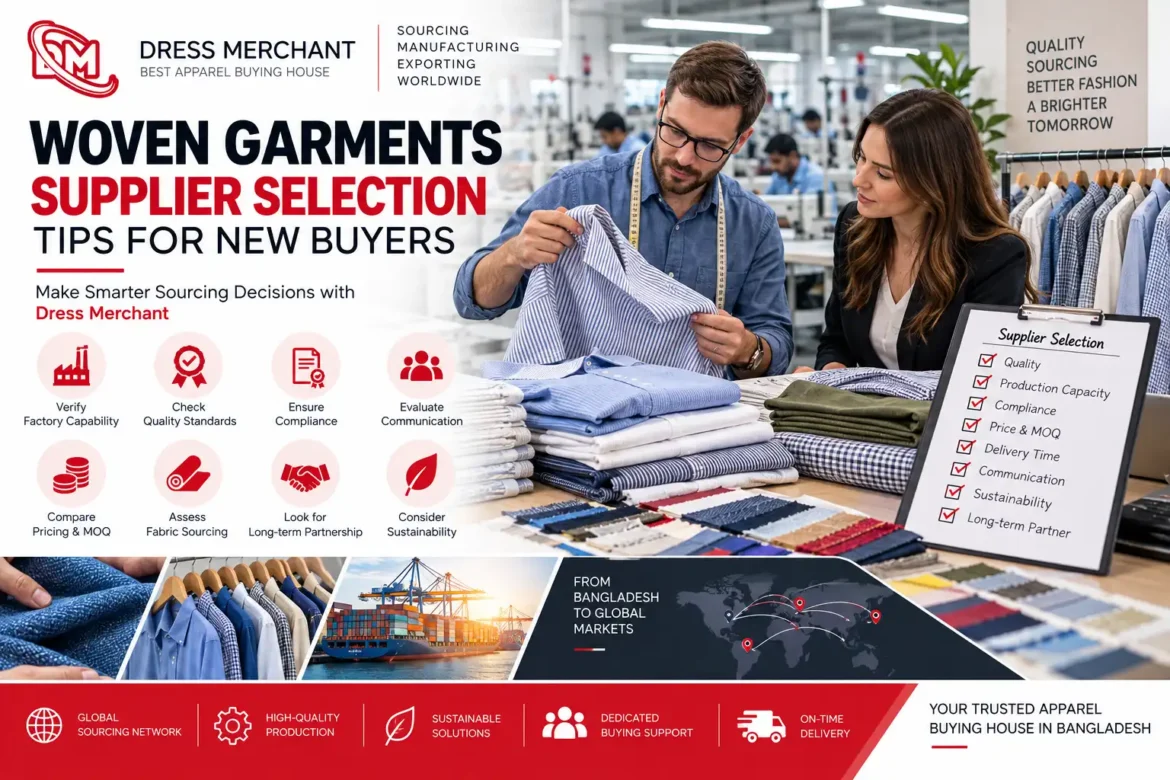
Woven Garments Supplier Selection Tips For New Buyers can make sourcing easier, safer, and more profitable. Discover how to evaluate quality, pricing, production capacity, compliance, communication, and export reliability before choosing a supplier. Dress Merchant, a leading Garments Buying House and trusted fashion buying agent, specializes in sourcing, production, and export of Apparel and Home Textiles for global buyers. Make your next sourcing decision with confidence.
Thank you for reading this post, don't forget to subscribe!1. Understand Your Woven Garment Requirements Before Choosing a Supplier
Before selecting a woven garments supplier, new buyers should clearly define what they need. A supplier can only provide accurate pricing, production timelines, and quality expectations when the product requirements are properly communicated. Start by identifying the type of woven garments you want to manufacture, such as shirts, blouses, trousers, dresses, skirts, jackets, overshirts, uniforms, or children’s woven clothing.
Fabric selection is another important consideration. Decide whether you require cotton, linen, polyester, viscose, rayon, denim, twill, poplin, canvas, or a blended fabric. Buyers should also specify fabric weight, composition, construction, color, finish, and performance requirements where applicable. If sustainability is important to your brand, communicate requirements for recycled, organic, or responsibly sourced materials at the beginning of the sourcing process.
Product specifications should also include measurements, size ranges, construction details, stitching requirements, trims, labels, buttons, zippers, packaging, and artwork. A detailed tech pack can make communication much easier and reduce misunderstandings during sampling and production.
New buyers should also establish their expected order quantity and target delivery date. Minimum order quantities can vary considerably between suppliers and factories, so understanding your purchasing requirements helps identify suppliers that are suitable for your business.
At Dress Merchant, we understand that every buyer has different product, quality, budget, and delivery requirements. A structured sourcing process can help buyers identify appropriate manufacturing partners rather than selecting a supplier based solely on price.
Ultimately, the more clearly you define your woven garment requirements, the easier it becomes to compare suppliers objectively and develop products according to your brand’s expectations.
2. Check the Supplier’s Experience in Woven Garment Manufacturing
Experience is one of the most important factors when selecting a woven garments supplier. A manufacturer with relevant experience is generally more familiar with fabric behavior, garment construction, production challenges, quality control procedures, and international buyer requirements.
However, buyers should look beyond the number of years a company has been operating. Examine whether the supplier has experience producing the specific categories of woven garments you require. For example, manufacturing a basic woven shirt involves different technical requirements from producing structured jackets, fashion dresses, tailored trousers, or children’s garments.
Ask potential suppliers about their previous product categories, production capabilities, machinery, quality-control procedures, and experience with export orders. If possible, review samples of similar products they have manufactured. This allows you to evaluate workmanship, stitching, finishing, measurements, fabric quality, and overall construction.
It is also useful to understand whether the supplier works directly with factories or operates primarily as a sourcing and buying organization. Both models can work for buyers, but the responsibilities, communication structure, and production management processes may differ.
International buyers should also consider whether the supplier understands export documentation, packaging requirements, inspection procedures, shipping schedules, and buyer compliance expectations. These factors become particularly important when working across international markets.
A reliable woven garments supplier should be able to explain its production process clearly and provide realistic information about capacity and lead times.
For new buyers, supplier experience can reduce avoidable production problems. Instead of selecting a manufacturer simply because it offers the lowest quotation, evaluate whether its technical knowledge and production experience match your product requirements. This approach can help establish a more dependable long-term sourcing relationship.
3. Evaluate Product Quality, Fabric Selection, and Workmanship
Product quality should be a central consideration when choosing a woven garments supplier. A competitive price is useful, but poor-quality garments can result in customer complaints, returns, rejected shipments, and damage to a brand’s reputation.
Start by evaluating the fabric. Check composition, weight, color consistency, shrinkage, strength, hand feel, appearance, and performance according to your product requirements. Depending on the garment category, buyers may also need to consider colorfastness, pilling, dimensional stability, and other applicable testing requirements.
Garment construction should receive equal attention. Examine seam quality, stitch density, thread selection, button attachment, zipper installation, hems, collars, cuffs, pockets, plackets, and other construction details. Small manufacturing inconsistencies can become significant problems when multiplied across thousands of garments.
Sampling provides an important opportunity to evaluate a supplier before bulk production. Request a development sample or pre-production sample and compare it carefully with your approved specifications. Check measurements against the measurement chart and review workmanship from different areas of the garment.
Buyers should also ask how the factory manages quality control. A structured quality system may include fabric inspection, cutting inspection, inline inspection, finishing inspection, measurement checks, and final inspection. The exact process can vary depending on the product and buyer requirements.
Communication is also important during quality approval. If a sample does not meet expectations, the supplier should be able to understand the comments and implement appropriate corrections.
New buyers should therefore evaluate quality through actual samples, specifications, testing where necessary, and production controls rather than relying only on verbal assurances.
A reliable supplier should treat quality as an ongoing production responsibility rather than something checked only after the garments have been completed.
4. Verify Factory Compliance, Certifications, and Ethical Standards
Factory compliance is an increasingly important consideration for international apparel buyers. A supplier may produce attractive garments at competitive prices, but buyers also need confidence that manufacturing practices meet their commercial, ethical, and regulatory requirements.
Before placing a significant order, ask the supplier about the factory’s compliance policies and relevant certifications. Depending on the buyer’s market and product requirements, this may include quality-management certifications, environmental standards, social compliance programs, chemical-management requirements, or other recognized certifications and audits.
Buyers should verify certification information rather than simply accepting claims presented in marketing materials. Ask for current documentation where appropriate and confirm whether certifications apply to the actual manufacturing facility involved in your order.
Social compliance can cover areas such as working hours, wages, workplace safety, employee welfare, child labor prevention, forced labor prevention, and other employment practices. Environmental considerations may include wastewater management, energy use, waste reduction, chemical handling, and responsible material sourcing.
The exact compliance requirements will depend on the buyer, destination market, product type, and applicable regulations. Therefore, new buyers should communicate their compliance expectations before production begins.
Supplier transparency is another useful indicator. A manufacturer that can clearly explain its factory structure, production facilities, compliance procedures, and documentation can make the sourcing process easier to manage.
For buyers working with a sourcing company or buying house, the sourcing partner can also help identify suitable factories and coordinate documentation, quality checks, production follow-up, and buyer requirements.
Compliance should not be treated as a final-stage formality. It should be incorporated into supplier selection and sourcing decisions from the beginning. A structured compliance process helps buyers build supply chains that are more transparent, accountable, and aligned with their business requirements.
5. Assess Production Capacity and Lead Time Before Placing Orders
Production capacity and lead time are critical when selecting a woven garments supplier. Even if a supplier offers good quality and attractive pricing, insufficient production capacity can create delays and affect your ability to meet market deadlines.
Begin by understanding the supplier’s approximate production capacity for your specific garment category. Capacity should not be considered only as a large monthly production figure. Buyers should determine whether the factory has sufficient cutting, sewing, finishing, quality-control, and packing resources for their particular order.
Lead time should also be discussed in detail. Apparel production typically involves several stages, including fabric and trim sourcing, lab dips or color approvals, sampling, cutting, sewing, finishing, inspection, packing, and shipment preparation. Delays at one stage can affect the entire delivery schedule.
New buyers should ask suppliers to provide realistic timelines rather than optimistic estimates. Clarify how long fabric and trims will require, when bulk production can begin, and how much time is required for final inspection and packing.
Seasonal demand can also influence production schedules. Garment factories may experience periods of high capacity utilization, particularly before major seasonal collections. Discussing production schedules early can help buyers plan their orders more effectively.
It is also useful to understand the supplier’s approach to urgent orders and production changes. Although unexpected situations cannot always be avoided, a well-organized supplier should have established processes for communicating delays and managing production issues.
For international buyers, delivery planning should include sufficient time for transportation and export procedures after manufacturing is completed.
A sourcing partner such as Dress Merchant can help buyers coordinate production schedules, communicate with factories, follow up on production progress, and manage different stages of the sourcing process.
6. Compare Woven Garment Pricing, MOQ, and Payment Terms
Price is naturally an important factor when selecting a woven garments supplier, but new buyers should avoid choosing a supplier based solely on the lowest quotation. A lower price does not always represent the lowest overall sourcing cost.
When comparing quotations, make sure suppliers are pricing the same product specifications. Differences in fabric composition, fabric weight, trims, construction details, packaging, testing, and finishing can significantly affect garment costs.
Buyers should request a detailed quotation that clearly identifies the main cost components where possible. Clarify whether the quoted price includes fabric, trims, labels, packaging, inspection, and other agreed requirements.
Minimum Order Quantity, or MOQ, is another important consideration. Some factories may have minimum quantities for garments, fabrics, colors, or specific trims. New businesses and smaller brands should identify suppliers whose MOQ requirements are compatible with their purchasing plans.
Payment terms should also be discussed before confirming an order. Different suppliers may have different requirements regarding deposits, balance payments, letters of credit, or other agreed arrangements. Buyers should ensure that payment terms are clearly documented in the commercial agreement.
Currency, shipping terms, duties, taxes, and other costs should also be considered when calculating the actual landed cost of the garments.
A useful approach is to compare the total sourcing value, rather than simply comparing the unit price. Quality consistency, production reliability, communication, compliance, lead time, and after-sales support can all affect the real cost of working with a supplier.
For new buyers, transparent pricing and clearly defined commercial terms can reduce misunderstandings and make budgeting easier. A professional sourcing partner can also help buyers communicate specifications to suppliers and compare quotations on a more consistent basis.
7. Review the Supplier’s Sampling and Product Development Process
Sampling is one of the most important stages in apparel sourcing because it allows buyers to evaluate a product before committing to bulk production. A capable woven garments supplier should have a structured sampling and product development process.
The process normally begins with product specifications, sketches, reference garments, tech packs, or other development information provided by the buyer. The supplier then develops the garment according to the required measurements, fabric, construction details, trims, and finishing specifications.
New buyers should carefully evaluate the first sample rather than treating it as a simple formality. Check measurements, fabric quality, stitching, garment construction, trims, color, fit, appearance, and finishing.
Depending on the product, several sample stages may be necessary. These can include development samples, fit samples, size-set samples, pre-production samples, or other approval samples. The exact process depends on the buyer’s requirements and the complexity of the product.
Communication during sample development is particularly important. Buyers may need to provide detailed comments, measurement corrections, construction changes, or material adjustments. The supplier should be able to understand these comments and implement them accurately.
New buyers should also ask about sample lead times and sample charges before beginning development. Clear communication at this stage can prevent unexpected costs and delays later.
Product development capability can be especially valuable for buyers who do not have a large internal technical team. A sourcing company or buying house can coordinate between the buyer, product development team, and factory to help translate concepts into commercially manufacturable garments.
The objective of sampling is not simply to create a visually attractive garment. It is to establish an approved product specification that can be reproduced consistently during bulk manufacturing.
A strong sampling process therefore provides an important foundation for successful woven garment production.
8. Evaluate Communication, Customer Service, and Order Management
Effective communication can make a significant difference in international apparel sourcing. Buyers may be working across different countries, time zones, languages, and business cultures, so clear communication is essential throughout the production cycle.
Before selecting a woven garments supplier, observe how quickly and accurately the company responds to inquiries. Does the supplier understand your requirements? Does it provide complete answers? Does it communicate potential problems early? These practical observations can provide useful information about how future orders may be managed.
Order management is equally important. A professional supplier should have a structured process for handling purchase orders, specifications, sample approvals, production updates, quality inspections, packing, and shipment documentation.
New buyers should establish a clear communication system from the beginning. Important information should ideally be documented through approved specifications, purchase orders, email confirmations, technical documents, and other appropriate records.
Time-zone differences can also affect communication. Agreeing on appropriate communication channels and response expectations can make international collaboration smoother.
Buyers should also understand who will be their primary contact. Depending on the supplier’s structure, communication may involve merchandising, production, quality-control, technical, logistics, and management teams.
When working with a Bangladesh apparel sourcing agent or buying house, buyers may have a centralized communication point that coordinates with multiple factories. This can simplify supplier communication and production follow-up, particularly for buyers sourcing several product categories.
Good customer service does not mean agreeing to every request. A professional supplier should provide realistic information and explain when a particular requirement may affect cost, quality, or delivery.
For new buyers, transparent and consistent communication can reduce misunderstandings and help establish a more organized sourcing relationship.
9. Check Export Experience and International Buyer References
Export experience is another valuable factor when evaluating a woven garments supplier. Manufacturing garments for domestic markets and managing international export orders can involve different documentation, quality, packaging, compliance, and logistics requirements.
New buyers should ask potential suppliers about their experience with international customers and the markets they currently serve. Relevant experience can indicate familiarity with export procedures and buyer-specific requirements, although it should still be verified during the supplier evaluation process.
Where appropriate, buyers can request references, case studies, production samples, or other evidence of previous international work. Confidentiality restrictions may prevent suppliers from disclosing customer names, so buyers should respect legitimate confidentiality requirements.
It is also useful to understand the supplier’s export documentation process. International shipments may require commercial invoices, packing lists, certificates, shipping documents, and other paperwork depending on the destination and transaction terms.
Buyers should also discuss inspection procedures. Depending on the agreement, inspection may take place before shipment or at other agreed production stages. Understanding the inspection process helps establish clear quality expectations.
Another important consideration is the supplier’s ability to maintain consistency across repeat orders. A supplier may produce an excellent first order but struggle to maintain the same standards later. Buyers should therefore evaluate production systems rather than relying entirely on a single sample.
Working with an experienced Bangladesh apparel sourcing agent can provide additional support in factory selection, supplier communication, production monitoring, quality coordination, and export processes.
For new buyers, international experience should be considered together with product expertise, quality systems, compliance, capacity, and communication.
The goal is to establish whether the supplier has the systems and experience necessary to support an international apparel supply chain reliably.
10. Why New Buyers Should Consider a Reliable Woven Garments Sourcing Agent in Bangladesh
For new buyers, sourcing woven garments directly from overseas factories can involve many moving parts. Supplier identification, price negotiation, fabric sourcing, product development, sampling, quality control, production follow-up, compliance, documentation, and shipment coordination can all require significant time and expertise.
A reliable woven garments sourcing agent can help simplify these processes by acting as a bridge between international buyers and suitable apparel manufacturers. Instead of approaching factories without sufficient information, buyers can work with a sourcing partner that understands local manufacturing capabilities and supplier networks.
A sourcing agent may assist with identifying factories based on product category, order quantity, quality requirements, budget, compliance expectations, and delivery schedule. The agent can also coordinate communication between the buyer and manufacturer throughout product development and production.
For woven garments, this can be particularly useful when products involve detailed construction, specialized fabrics, multiple trims, or strict quality requirements. A sourcing team can help communicate technical specifications and coordinate sample revisions with manufacturers.
Production follow-up is another potential advantage. Buyers located outside Bangladesh may find it difficult to monitor factory activities directly. A local sourcing partner can coordinate production updates, quality inspections, and issue resolution according to the agreed sourcing process.
Dress Merchant works as an apparel buying house and sourcing partner in Bangladesh, supporting international buyers with apparel sourcing, product development, manufacturing coordination, and export-related requirements. Dress Merchant
However, buyers should still conduct appropriate due diligence when selecting a sourcing agent. Review the company’s experience, product categories, communication process, supplier network, quality-control approach, and commercial terms.
For new buyers, the right sourcing structure can make the process of developing and purchasing woven garments more organized. The objective should be a transparent relationship where the buyer, sourcing partner, and manufacturer understand their respective responsibilities from product development through final shipment.
Conclusion: Woven Garments Supplier Selection Tips For New Buyers
Choosing the right woven garments supplier is one of the most important decisions for new buyers entering the global apparel market. A reliable supplier should offer more than competitive pricing—it should demonstrate consistent product quality, transparent communication, ethical manufacturing practices, production capacity, on-time delivery, and strong quality control. New buyers should carefully evaluate a supplier’s manufacturing capabilities, compliance standards, sampling process, export experience, and ability to meet specific product requirements before placing an order.
For buyers sourcing woven apparel from Bangladesh, working with an experienced buying house and sourcing partner can make the entire process more efficient and secure. From supplier selection and fabric sourcing to product development, production monitoring, quality inspection, and shipment coordination, the right sourcing partner can help reduce risks and maintain consistent standards.
Dress Merchant is an experienced apparel buying house, apparel buying agent, sourcing, manufacturing, and exporting company in Bangladesh. We help international buyers source quality apparel through a reliable network of manufacturing partners while supporting product development, production management, quality assurance, compliance, and export coordination. As a sourcing agent for handicraft manufacturers and exporters, we also connect buyers with suitable suppliers for a broader range of products.
Ultimately, successful woven apparel sourcing begins with choosing the right supplier and building a transparent, long-term business relationship. By following these supplier selection tips and partnering with a knowledgeable sourcing company like Dress Merchant, new buyers can approach the Bangladesh apparel market with greater confidence and a structured sourcing strategy.