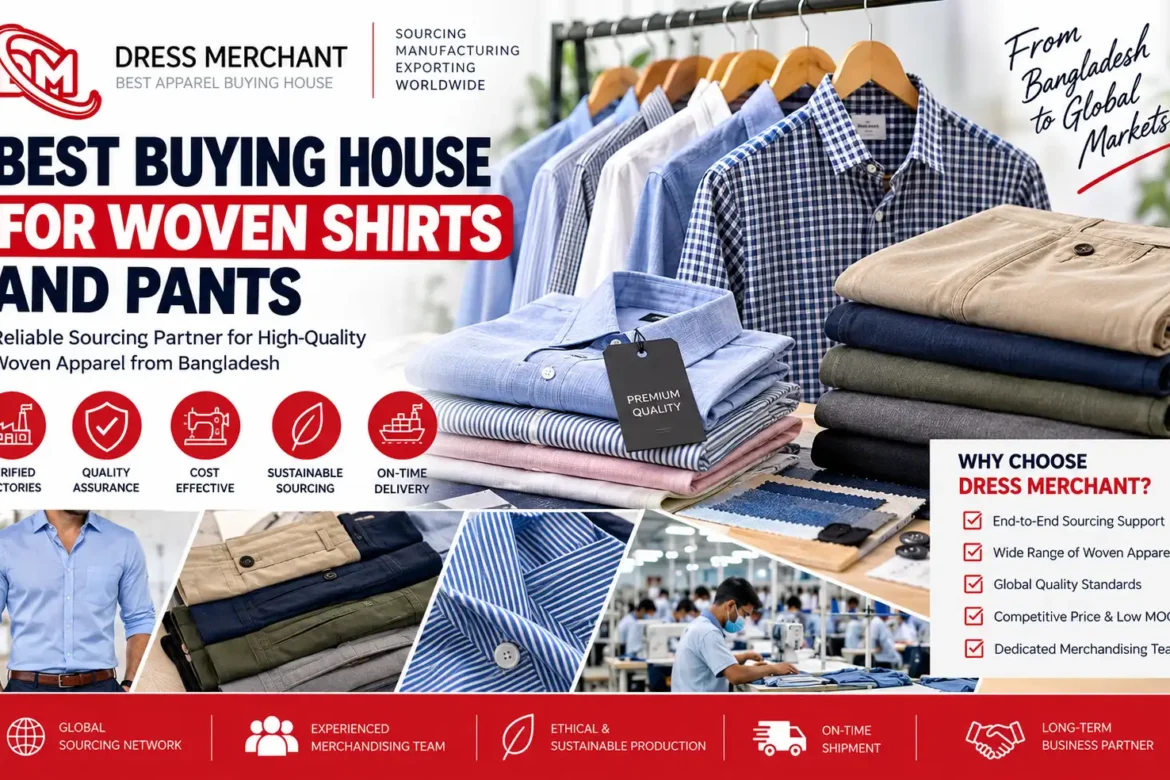
Best Buying House For Woven Shirts And Pants—Dress Merchant connects global buyers with reliable sourcing, production, and export solutions from Bangladesh. From stylish woven shirts and tailored pants to quality control, factory coordination, and on-time delivery, our expert fashion buying agents manage every step. Discover dependable apparel sourcing, competitive pricing, and professional support for your next wovenwear collection.
Thank you for reading this post, don't forget to subscribe!What Makes a Buying House the Best Choice for Woven Shirts and Pants?
Choosing the right buying house is an important decision for international buyers sourcing woven shirts and pants from Bangladesh. A reliable buying house does more than connect buyers with garment factories. It coordinates sourcing, product development, production, quality control, compliance, communication, and shipment to help buyers manage the entire apparel supply chain efficiently.
For new buyers, experience and supplier networks are particularly important. A professional buying house should understand different woven fabrics, garment construction, trims, measurements, finishing requirements, and international quality expectations. It should also be capable of identifying suitable factories according to product type, order quantity, target price, quality requirements, and delivery schedule.
The best buying house for woven shirts and pants should provide transparent communication throughout the production process. International buyers need regular updates about sampling, fabric booking, production progress, inspections, and shipment. Clear communication can reduce misunderstandings and help prevent costly production delays.
Another important factor is factory selection. Bangladesh has a large and diverse apparel manufacturing industry, but not every factory is suitable for every type of woven product. An experienced buying house can evaluate factories based on production capabilities, compliance requirements, machinery, quality systems, capacity, and previous experience.
For new international buyers, working with a knowledgeable buying house can simplify the process of sourcing woven shirts and pants from Bangladesh while providing greater visibility and control over production.
How to Choose the Best Buying House for Woven Shirts and Pants
Selecting a buying house should involve more than comparing prices. New international buyers should evaluate a potential sourcing partner based on experience, factory network, communication, quality control procedures, compliance knowledge, and ability to manage the complete production cycle.
First, consider the buying house’s experience with woven garments. Woven shirts and pants can involve different fabrics, construction techniques, washing processes, trims, embellishments, and finishing requirements. A buying house familiar with these products can help identify suitable manufacturers and avoid production issues.
Second, evaluate the company’s supplier and factory network. A strong network allows a buying house to match each order with an appropriate manufacturer instead of directing every product to the same factory. This becomes especially important when buyers have specific requirements for fabric, capacity, price, quality, or sustainability.
Quality assurance should also be a major consideration. Ask how the buying house manages sample approval, inline inspections, final inspections, measurement checks, workmanship, fabric quality, color consistency, and packing standards.
Communication is equally important. International buyers may be working across different time zones and languages, so they need a sourcing partner that can provide clear and timely information.
Finally, look for a buying house that understands international export procedures and can coordinate production from initial inquiry through shipment. Dress Merchant works as an apparel sourcing and buying-house partner, helping international buyers coordinate garment sourcing, product development, manufacturing, quality management, and export requirements in Bangladesh.
Why Bangladesh Is a Leading Sourcing Destination for Woven Shirts and Pants
Bangladesh has developed a globally recognized apparel manufacturing ecosystem, making the country an important sourcing destination for international fashion brands, retailers, wholesalers, and importers.
The country’s garment industry offers access to a broad network of manufacturers with experience producing different categories of apparel. This includes woven shirts, trousers, pants, jackets, dresses, uniforms, workwear, and other fashion products.
One of the advantages of sourcing woven garments from Bangladesh is the availability of an established textile and apparel supply chain. Buyers can source fabrics, trims, labels, packaging materials, and other garment components through a developed supplier network.
Bangladesh also has extensive experience serving international markets. Manufacturers and buying houses routinely work with buyer specifications, technical packs, approved samples, quality standards, inspection requirements, packaging instructions, and shipment schedules.
For new buyers, however, entering a new sourcing market can still be challenging. Identifying the right factory, negotiating suitable prices, checking production capabilities, and maintaining quality can require considerable time and industry knowledge.
This is where a professional Bangladesh buying house can add value. Instead of approaching multiple factories independently, buyers can work through a sourcing partner that understands the local manufacturing environment and can coordinate different stages of the process.
For companies looking for woven shirts and pants suppliers in Bangladesh, the combination of manufacturing capabilities, supplier networks, experienced professionals, and export-oriented production makes Bangladesh an attractive sourcing market.
Key Woven Shirt and Pant Sourcing Services Offered by Buying Houses
A professional buying house can provide a wide range of services designed to simplify apparel sourcing for international buyers. These services can begin with product development and continue through manufacturing, inspection, documentation, and shipment.
Product sourcing is one of the first steps. The buying house reviews the buyer’s requirements and identifies suitable manufacturers based on product category, order volume, target price, quality expectations, and delivery schedule.
Sampling and product development are also essential. Buyers may provide sketches, reference samples, tech packs, measurements, or fabric specifications. The buying house can coordinate with manufacturers to develop samples and arrange revisions until the product meets the buyer’s requirements.
Fabric and trim sourcing is another important service. Woven shirts and pants may require specific fabrics such as cotton, poplin, twill, linen blends, denim, polyester blends, or other materials. Buttons, zippers, labels, hang tags, interlinings, drawcords, and packaging components must also meet the approved specifications.
Buying houses may additionally coordinate production management, quality control, factory communication, compliance requirements, packing, documentation, and shipment coordination.
For new international buyers, having these functions coordinated through one experienced sourcing partner can make the procurement process more organized and manageable.
Quality Control Standards for Woven Shirts and Pants
Quality control is one of the most important considerations when sourcing woven shirts and pants internationally. A garment may look correct during sampling but still develop problems during bulk production if production controls are not properly maintained.
A reliable buying house should establish quality checkpoints throughout the manufacturing process. The process can begin with reviewing the approved sample, specifications, measurements, fabric requirements, trims, construction details, and packaging instructions.
During fabric sourcing, factors such as composition, GSM, color, width, shrinkage, shade consistency, and fabric defects may need to be checked according to the buyer’s requirements.
During garment production, quality teams can monitor stitching, seam construction, measurements, button placement, zipper operation, pocket positioning, collar shape, sleeve construction, pressing, finishing, and overall workmanship.
For woven pants, additional attention may be required for waistband construction, pocket measurements, fly and zipper construction, inseam and outseam measurements, belt loops, and garment finishing.
Final inspection provides another opportunity to identify defects before shipment. Depending on the buyer’s requirements, inspections may include visual workmanship checks, measurement verification, quantity checks, packing inspection, and other specified quality procedures.
For new buyers, it is beneficial to establish quality standards before production begins. A professional buying house can help translate buyer expectations into practical production and inspection requirements for the selected manufacturer.
How Buying Houses Ensure Competitive Pricing for Woven Apparel
Price is an important factor in international apparel sourcing, but the lowest quotation does not necessarily represent the most suitable sourcing option. Buyers should consider the relationship between price, quality, production capability, lead time, compliance, and overall value.
An experienced buying house can help buyers develop a realistic costing structure by reviewing fabric consumption, garment construction, trims, washing or finishing requirements, packaging, labor, and other production components.
Fabric is often one of the largest components of woven garment cost. Choosing an appropriate fabric composition, weight, construction, and finish can significantly affect the final price. A sourcing professional can help buyers evaluate alternative materials when suitable without compromising the intended product specifications.
Order quantity can also influence pricing. Larger production volumes may provide manufacturers with greater production efficiency, while smaller orders may require different factory selection and costing strategies.
A buying house can also compare suitable manufacturing options based on the buyer’s requirements. Rather than focusing solely on the lowest factory quotation, the objective should be to identify a manufacturer capable of delivering the required quality at a commercially viable price.
For new international buyers, transparent costing and clear communication are especially important. A well-managed sourcing process helps buyers understand what is included in the quotation and reduces the possibility of unexpected costs later in production.
Fabric Sourcing and Product Development for Woven Shirts and Pants
Successful woven garment production begins with appropriate product development and fabric selection. The same shirt design can produce very different results depending on the fabric composition, weight, construction, finishing, and washing process.
For woven shirts, buyers may consider fabrics such as cotton poplin, oxford, twill, linen blends, rayon, viscose, polyester blends, or other materials depending on the intended market and product positioning.
Woven pants may require fabrics such as cotton twill, denim, canvas, polyester blends, linen blends, stretch fabrics, or other constructions. The appropriate choice depends on the design, comfort requirements, durability, season, target consumer, and retail positioning.
A buying house can coordinate fabric sourcing based on the buyer’s technical specifications. This may include fabric composition, GSM, color, hand feel, construction, performance requirements, and finishing.
Product development can also involve pattern adjustments, measurement specifications, sample revisions, trims, labels, embroidery, printing, washing, and finishing.
For new buyers, working with a sourcing partner during this stage can reduce communication gaps between the buyer and manufacturer. Technical requirements can be communicated clearly, samples can be reviewed systematically, and necessary corrections can be addressed before bulk production.
A well-organized development process helps establish a clear production standard before the order moves into manufacturing.
Compliance and Ethical Manufacturing in Woven Apparel Sourcing
Compliance is an increasingly important consideration for international apparel buyers. Buyers often need to evaluate not only product quality and price but also the manufacturing environment and business practices of their suppliers.
When selecting factories for woven shirts and pants, buyers may consider areas such as workplace safety, labor practices, environmental management, social compliance, production standards, and relevant certifications or audit requirements.
A professional buying house can help buyers identify factories that are appropriate for their specific compliance requirements. However, the exact requirements can vary depending on the buyer, destination market, product category, brand policies, and applicable regulations.
Environmental considerations are also becoming increasingly relevant in apparel sourcing. Buyers may ask manufacturers about responsible resource management, wastewater treatment, chemical management, energy efficiency, waste reduction, and sustainable materials.
Ethical sourcing should be approached as an ongoing process rather than a one-time factory check. Factory conditions, documentation, production practices, and compliance requirements may need periodic review.
For new international buyers entering the Bangladesh apparel market, an experienced buying house can provide valuable local coordination and help communicate the buyer’s compliance expectations to potential manufacturing partners.
Production Management and On-Time Delivery of Woven Garments
On-time delivery is essential for international apparel buyers because delays can affect retail launches, seasonal collections, inventory planning, and customer commitments.
Woven shirts and pants often involve multiple production stages, including fabric sourcing, fabric inspection, cutting, printing or embroidery where required, sewing, washing, finishing, pressing, inspection, packing, and shipment. Delays at any stage can affect the final delivery schedule.
Production management therefore begins before bulk manufacturing. A buying house can help establish a production timeline covering sample approval, material booking, production start, inline inspection, finishing, final inspection, and shipment preparation.
Regular production follow-up can help identify potential problems early. If fabric delivery is delayed or a sample requires revision, the production schedule may need to be adjusted accordingly.
Communication between the buyer, buying house, and manufacturer is particularly important. Buyers should receive appropriate updates about production progress and any issues that could affect the agreed timeline.
For new buyers, a structured production management system can provide greater visibility throughout the sourcing process. A professional Bangladesh buying house can coordinate with local manufacturers and help keep the order moving according to the agreed production plan.
Why Dress Merchant Can Be Your Trusted Buying House for Woven Shirts and Pants
For international buyers entering the Bangladesh apparel market, choosing the right sourcing partner can make the process more organized and efficient. Dress Merchant operates as an apparel buying house and sourcing partner, supporting international clients with garment sourcing, product development, manufacturing coordination, quality management, and export-related services.
The company works with a network of apparel manufacturers and can help buyers identify suitable production partners according to product specifications, order requirements, quality expectations, and commercial objectives.
For woven shirts and pants, the sourcing process can cover multiple stages—from fabric and trim sourcing to sample development, production follow-up, quality inspection, packing, and shipment coordination.
Dress Merchant’s role is not simply to connect a buyer with a factory. The objective is to coordinate communication between the international buyer and the manufacturing supply chain while helping maintain the buyer’s specifications throughout the production process.
New buyers can benefit from having a local sourcing team that understands Bangladesh’s apparel manufacturing environment and can communicate with factories on their behalf. This can help reduce the complexity of managing production from overseas.
Whether you are developing a new woven shirt collection, sourcing trousers for a retail program, or looking for a long-term apparel manufacturing partner, selecting a suitable buying house for woven shirts and pants is an important step toward building a dependable supply chain.