Why Choose A Garments Buying House For Woven Wear? Discover how Dress Merchant simplifies woven apparel sourcing with trusted suppliers, expert production management, strict quality control, competitive pricing, and reliable export support.
Thank you for reading this post, don't forget to subscribe!As a leading garments buying house and fashion buying agent in Bangladesh, we help international buyers source high-quality woven wear and home textiles efficiently, ensuring smooth production, timely delivery, and consistent quality from start to finish.
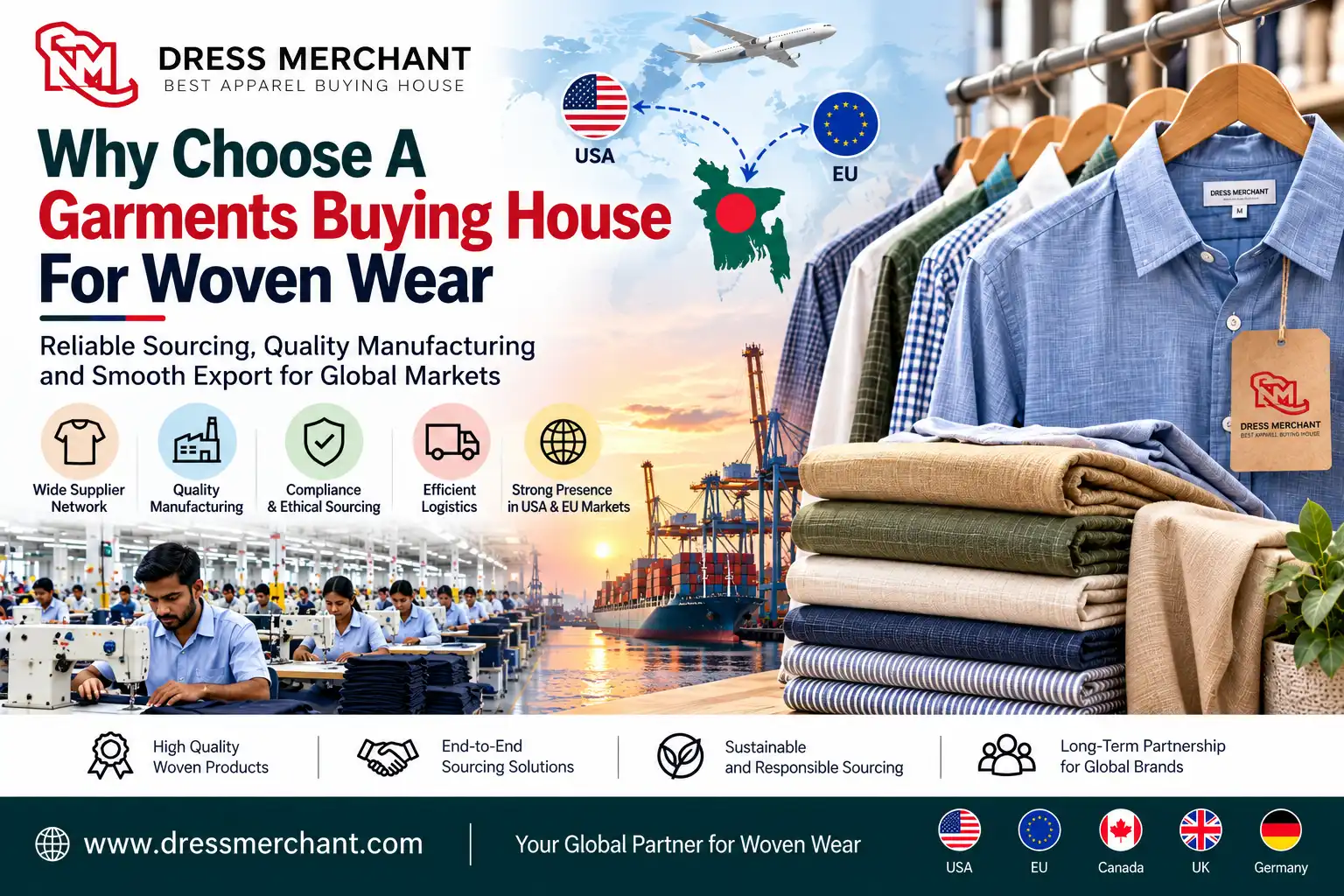
What Is a Garments Buying House for Woven Wear?
A garments buying house acts as a professional bridge between international buyers and qualified garment manufacturers. For woven wear, this means helping brands, retailers, wholesalers, and importers source products such as woven shirts, blouses, dresses, trousers, skirts, jackets, overshirts, and other apparel from suitable manufacturing partners.
For a new international buyer, working directly with an unfamiliar factory can involve considerable time and operational challenges. Finding the right manufacturer, evaluating production capabilities, negotiating prices, developing samples, monitoring quality, and coordinating shipments can require significant local knowledge. A professional garments buying house simplifies this process by managing these activities on the buyer’s behalf.
In Bangladesh, a buying house can also provide valuable access to an established apparel manufacturing ecosystem. The sourcing team can identify factories according to product category, order requirements, production capacity, quality expectations, compliance standards, and target price.
For woven wear programs, the right sourcing partner does more than find a low-cost supplier. It helps ensure that the selected manufacturer is appropriate for the product and capable of delivering consistent quality, reliable production, and on-time shipment. This makes a buying house particularly valuable for international companies entering the Bangladesh sourcing market for the first time.
Why Choose a Garments Buying House for Woven Wear Sourcing?
Choosing a garments buying house can make woven wear sourcing more efficient, transparent, and manageable for international buyers. Instead of coordinating with multiple factories and local service providers, buyers can work through one experienced sourcing partner that understands their product and commercial requirements.
A professional buying house can assist throughout the sourcing journey, from initial product development and supplier selection to sampling, price negotiation, production follow-up, quality inspection, documentation, and shipment coordination. This gives buyers greater control without requiring them to establish their own sourcing office in Bangladesh.
Another important advantage is local market knowledge. An experienced buying house understands the strengths of different manufacturers and can recommend suppliers based on the buyer’s specific requirements rather than simply selecting the cheapest available option.
For new buyers, this local expertise can reduce sourcing risks and shorten the learning curve. Whether the requirement is for fashion shirts, casual woven dresses, cotton trousers, workwear, uniforms, or other woven apparel, a buying house can help connect the buyer with suitable manufacturing capabilities.
The objective is simple: make international woven garment sourcing easier while maintaining the required standards for quality, price, compliance, and delivery.
Access to Reliable Woven Garment Manufacturers in Bangladesh
One of the biggest challenges for a new international buyer is identifying reliable woven garment manufacturers. Bangladesh has a large and diverse apparel manufacturing base, but not every factory is suitable for every product, order quantity, quality level, or target market.
A knowledgeable garments buying house can help buyers identify manufacturing partners according to their specific requirements. Supplier selection may consider product expertise, machinery, production capacity, quality systems, compliance practices, previous export experience, and the factory’s ability to handle the required order volume.
For example, a buyer sourcing premium woven shirts may need a different manufacturing partner from a company purchasing large-volume basic trousers. Similarly, a fashion brand requiring frequent style changes and smaller production runs may have different requirements from a major retailer placing large seasonal orders.
The buying house evaluates these differences before recommending suitable suppliers. This supplier-matching approach can help international buyers avoid one of the most common sourcing mistakes: choosing a factory based only on price.
With the right sourcing partner, buyers gain access to a broader network of qualified woven garment manufacturers while having a local team available to communicate requirements and coordinate the production process.
How Buying Houses Ensure Woven Garment Quality and Compliance
Quality consistency is critical when sourcing woven apparel for international markets. A garment may meet the target price but still create commercial problems if fabric quality, measurements, stitching, color, finishing, packaging, or workmanship do not meet the approved specifications.
A professional buying house helps establish quality expectations before bulk production begins. This may include reviewing specifications, approved samples, fabric details, measurement charts, workmanship requirements, trims, labels, packaging instructions, and other buyer standards.
During production, the sourcing team can follow up with the factory and coordinate inspections at appropriate stages. Depending on the buyer’s requirements, quality checks may cover fabric and trims, cutting, sewing, finishing, measurements, appearance, packing, and final product conformity.
Compliance is equally important for international buyers. Depending on the destination market and customer requirements, factories may need to meet specific social, ethical, environmental, safety, or quality standards.
An experienced buying house helps buyers communicate these requirements clearly to manufacturing partners and supports the necessary follow-up. This provides an additional layer of control for buyers who may not have an established quality or compliance team in Bangladesh.
Cost-Effective Woven Wear Sourcing for International Buyers
Competitive pricing is one of the major reasons international brands consider Bangladesh for apparel sourcing. However, achieving a competitive price does not simply mean finding the lowest factory quotation.
A professional garments buying house looks at the overall sourcing equation. Fabric selection, garment construction, trims, order quantity, production efficiency, packaging, quality requirements, lead time, and shipping considerations can all influence the final cost.
An experienced sourcing team can negotiate with appropriate manufacturers and compare quotations while considering the buyer’s specifications. If there are opportunities to optimize construction, fabric consumption, trims, or production methods without compromising the product, the buying house can discuss those options with the buyer.
This approach helps create a more sustainable cost structure rather than pursuing an unrealistically low initial quotation that could lead to quality or delivery problems later.
For new international buyers, this can be particularly useful because local negotiation practices and supplier pricing structures may be unfamiliar. A Bangladesh-based buying house provides local commercial knowledge while keeping the buyer focused on product development and business growth.
Expert Production Management for Woven Garments
Managing woven garment production involves many stages, and delays or communication gaps at any stage can affect the final shipment. A buying house provides local production follow-up to help keep the order moving according to the agreed plan.
Once an order is confirmed, the sourcing team can coordinate with the selected manufacturer regarding materials, sample approval, production planning, fabric and trim availability, cutting, sewing, finishing, packing, and shipment readiness.
Production follow-up is especially important for international buyers working across different time zones. Instead of repeatedly communicating with factories from overseas, buyers can rely on a local representative to follow up on progress and report important developments.
If an issue arises during production, the buying house can communicate with the factory, understand the problem, and discuss potential solutions with the buyer. This local presence can make communication faster and reduce unnecessary delays.
For woven apparel programs with multiple styles, colors, sizes, or delivery dates, organized production management becomes even more important. A reliable buying house helps coordinate these details so that the buyer has better visibility throughout the manufacturing process.
Customized Woven Apparel Solutions for Global Fashion Brands
International buyers rarely have identical sourcing requirements. Some need private-label products, while others require custom designs, specific fabrics, unique washes, special finishes, branded trims, or customized packaging.
A capable garments buying house can support product development according to the buyer’s individual specifications. The process can begin with tech packs, sketches, reference samples, measurement specifications, fabric requirements, or other product information supplied by the buyer.
The sourcing team can then work with appropriate manufacturers to develop samples and communicate technical requirements. Sample development provides an opportunity to review the product before committing to bulk production.
This is particularly valuable for fashion brands and retailers introducing new woven collections. Buyers can refine fit, fabric, construction, color, trims, and finishing before production moves forward.
From basic commercial apparel to more specialized fashion products, customized sourcing gives international buyers greater flexibility while allowing them to benefit from Bangladesh’s established garment manufacturing capabilities.
Streamlined Sampling, Order Management, and Shipment Coordination
Efficient communication is essential when working with overseas garment suppliers. A professional buying house helps organize the different stages of an order so that information moves clearly between the buyer and manufacturer.
Sampling is often the first major step. Buyers may require development samples, fit samples, size sets, pre-production samples, or other approvals depending on their sourcing process. The buying house can coordinate these developments with the selected factory and communicate feedback until the product meets the required specifications.
Once the order is approved, the buying house can continue coordinating production updates, approvals, quality follow-up, packing requirements, and shipment readiness.
Shipment coordination is another important part of the sourcing process. A buying house can communicate with the manufacturer and relevant logistics parties to help ensure that goods are prepared according to the agreed shipping schedule and documentation requirements.
For a new international buyer, having one experienced local contact throughout these stages can significantly simplify the sourcing process. Instead of managing fragmented communication with multiple parties, the buyer receives centralized support from a dedicated sourcing team.
Sustainable and Ethical Woven Garment Sourcing Through Buying Houses
Sustainability and responsible manufacturing have become increasingly important for international apparel buyers. Brands and retailers are looking beyond product price and considering factors such as responsible production, worker welfare, environmental practices, material selection, and supply-chain transparency.
A garments buying house can help buyers communicate their sustainability and compliance expectations to potential manufacturing partners. Where required, supplier selection can take into account factory certifications, audit requirements, environmental practices, social compliance, and the buyer’s responsible sourcing policies.
Sustainable woven apparel sourcing can also involve material choices. Depending on the product and buyer requirements, sourcing teams may explore options such as organic or recycled materials, responsibly sourced fabrics, more efficient production methods, and packaging alternatives.
The right approach depends on the buyer’s target market and sustainability policy. A professional buying house should therefore focus on matching buyers with manufacturers that can realistically meet their specific requirements rather than making generic sustainability claims.
For international brands building long-term supply chains, responsible sourcing can contribute to stronger supplier relationships, improved transparency, and more sustainable business growth.
Why Dress Merchant Is a Reliable Partner for Woven Wear Sourcing
For international buyers entering the Bangladesh apparel market, selecting the right sourcing partner is an important first step. Dress Merchant provides professional apparel sourcing and buying house services designed to connect international buyers with suitable manufacturing partners in Bangladesh.
As an apparel buying house and sourcing partner, Dress Merchant supports buyers across key stages of the sourcing process, including supplier selection, product development, sampling, price negotiation, production follow-up, quality coordination, and export support.
The company works with a network of partner factories and focuses on matching manufacturing capabilities with each buyer’s product requirements. This approach allows international buyers to explore Bangladesh’s woven apparel manufacturing capabilities while having a dedicated local team to coordinate the process.
For new buyers, the benefit goes beyond supplier access. A reliable buying house provides local knowledge, communication support, production visibility, and practical sourcing assistance throughout the order lifecycle.
Whether you are looking for woven shirts, dresses, trousers, skirts, jackets, uniforms, or other woven apparel, choosing an experienced Bangladesh-based sourcing partner can make the process more efficient and manageable.
Conclusion: Why Choose A Garments Buying House For Woven Wear
Choosing a reliable garments buying house for woven wear can make the entire apparel sourcing process more efficient, transparent, and cost-effective. From fabric and supplier selection to product development, manufacturing, quality control, compliance, and export coordination, an experienced buying house provides international buyers with the local expertise and professional support needed to source woven garments confidently from Bangladesh.
Dress Merchant is a trusted apparel buying house and apparel buying agent in Bangladesh, supporting international buyers with end-to-end sourcing, manufacturing, quality assurance, and export solutions. Our experienced sourcing network helps buyers access reliable manufacturers capable of producing a wide range of woven products while maintaining consistent quality, competitive pricing, ethical production standards, and timely delivery.
For buyers looking to source woven wear from Bangladesh, partnering with Dress Merchant means having a dependable local sourcing partner that understands international market requirements and manages the complexities of production on your behalf. Whether you are sourcing shirts, trousers, dresses, jackets, skirts, workwear, or other woven apparel, Dress Merchant helps turn your product requirements into commercially successful garments.
Beyond apparel, Dress Merchant also works as a sourcing agent for handicraft manufacturers and exporters, helping international buyers explore quality handicraft products from Bangladesh through a reliable and professionally managed sourcing process.
If you are looking for a dependable garments buying house, apparel buying agent, and sourcing partner in Bangladesh, Dress Merchant is ready to support your woven wear and handicraft sourcing requirements from product development to final export.